

This article discusses a scam that impersonates the Azim Premji Foundation, Wipro Limited, and their executives. Neither the Azim Premji Foundation, Wipro, Azim Premji University, nor the individuals named are involved in the scam. All third-party company names, product names, brand names, and trademarks referenced in this article are the property of their respective owners.
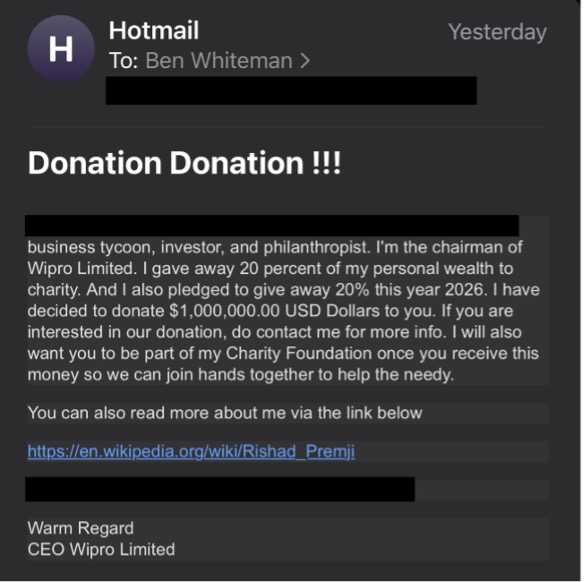
An email lands in your inbox with a subject like “Donation Donation !!!” It says a famous billionaire philanthropist has chosen you to receive a personal gift of $1,000,000 as part of a pledge to give away his fortune. It even links to the real Wikipedia page of the executive to prove he exists. What looks like life-changing good news is an advance-fee scam, a request for money upfront before a promised payout ever arrives. Here’s how it unfolds and how to spot it early.
How the scam works
1. An email promises you a million-dollar gift from a real philanthropist.
The message arrives from a spoofed free email account and claims to come from a well-known company chairman. He’s said to be giving away a share of his wealth to charity. To make it feel verifiable, it links to the person’s genuine Wikipedia page and uses convincing philanthropic language. The scam leans on the Azim Premji Foundation name because the family’s previous charitable giving is significant and widely reported. In addition to receiving the promise of a large sum of money, you’re asked to keep the informaton private, keeping anyone who might question it in the dark.
2. A “formal introduction” collects your personal details.
Once you reply, the sender asks for detailed personal information to “process” the gift: your name, address, age, occupation, marital status, income, religion, and how you plan to use the money. It’s framed as a routine step. In reality, it builds a profile that can be used for identity theft and future targeting.
3. A sudden illness hands you to a lawyer, then a fee appears.
The story then takes a turn. The philanthropist has supposedly been diagnosed with dementia and his devices have been taken away, so a lawyer based in Italy steps in. This lawyer claims to hold a Power of Attorney and confirms the donation is approved. Then he requests your full banking details: bank name and address, account number, account name, SWIFT code, routing number, and phone number.
Despite handing over all of this information, you are now asked to pay a transfer fee. of $2,775, backed by a fake insurance claim and an Italian bank account to which you pay the fee.. There’s pressure to respond quickly. The fee was the goal of the scam all along. People who pay it usually receive nothing in return and are hit with more invented charges for tax, courier, or unfreezing the account.
Red flags to watch for
Here’s what gives this scam away.
- Unsolicited windfall: A stranger emails to say you’ve been chosen for a large gift you never applied for.
- A fee to receive money: You’re asked to pay before the funds can be released. No legitimate bank charges you to accept an incoming donation.
- Request for secrecy : You’re told to keep the exchange private, which is designed to stop you from consulting anyone else about the offer.
- Realistic information: Real names, logos, and Wikipedia links are used to make a fake offer look legitimate.
- A convenient handoff: A sudden illness moves you to a new contact, often a “lawyer” in another country.
- A rush of banking requests: You’re asked for full account details, SWIFT and routing numbers all at once.
- Pressure to act fast: The message urges a “swift response” so you act before you verify it.
How to stay safe
- Pause before you reply. Unexpected offers of large sums are almost always fraudulent. Take your time to verify it.
- Never pay to receive money. Any request for a fee, tax, or “insurance” upfront is the clearest sign of a scam.
- Protect your details. Don’t share personal or banking information with someone who contacted you out of the blue.
- Verify it through official channels. Look up the real organization yourself and use the contact details on its own website, not the ones in the email.
- Talk to someone you trust. Ignore any instructions to keep the exchange secret and check with a friend or family member.
- Report it. In the US, file with the FTC at ReportFraud.ftc.gov. In Australia, report to Scamwatch. Reporting helps warn others.
- Use Trend Micro ScamCheck. It can flag suspicious messages and known scam patterns before you ever respond.
This scam is built to feel legitimate. It uses a real philanthropist’s name, real charitable pledges, and links to genuine pages, all designed to lower your guard. Even careful, well-informed people encounter tactics like these. Now that you know how the story unfolds, from the generous offer to the surprise fee, you’re already ahead. If an unexpected gift comes with a request for money or your bank details, trust your instincts and walk away.
0 Comments
Other Topics
You Might Also Be Interested In...


