

Someone wants to watch a brand-new movie release without paying for a ticket or a subscription, so they search for a free copy online. A site or ad promises exactly that: the full movie, right now, no cost. TrendLife researchers set out to answer three questions: how these fake sites actually work, how many people are running into them, and whether any of that activity lines up with new movie releases.
The fake sites are convincing on purpose
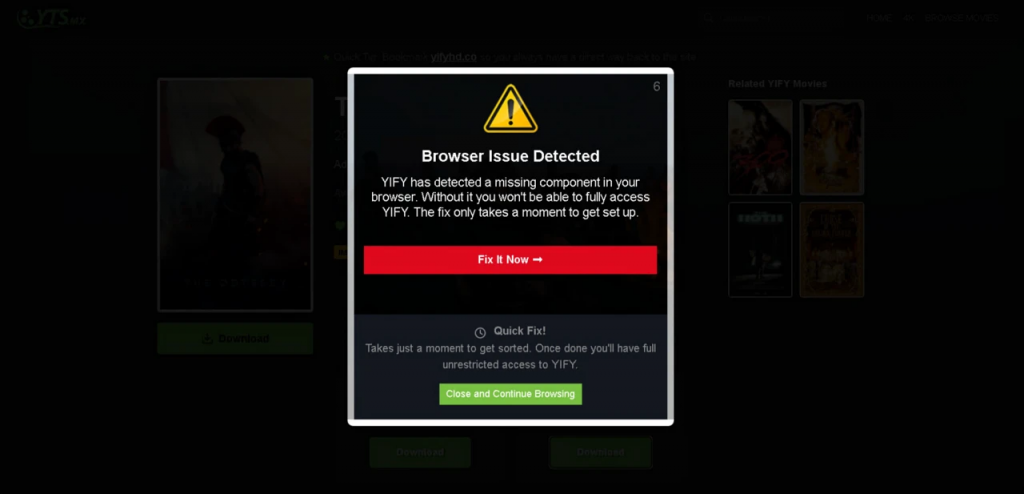
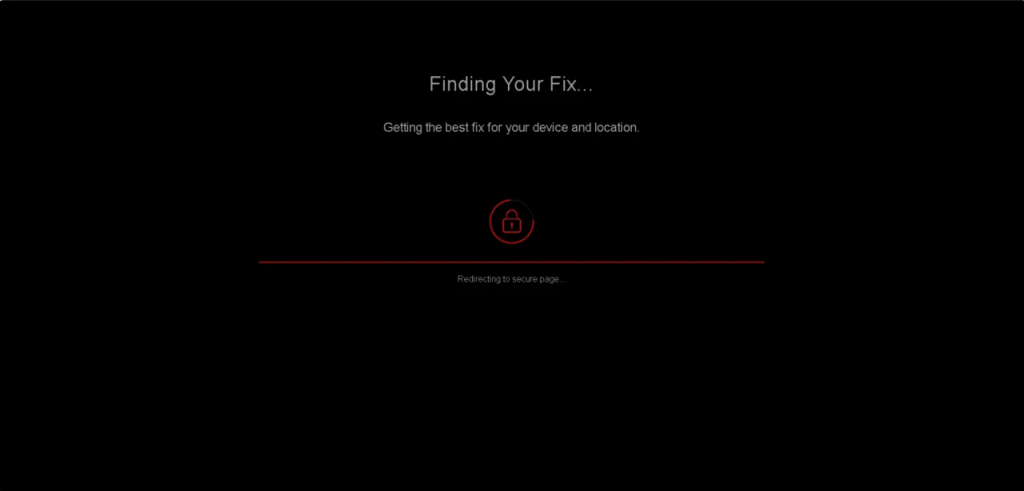
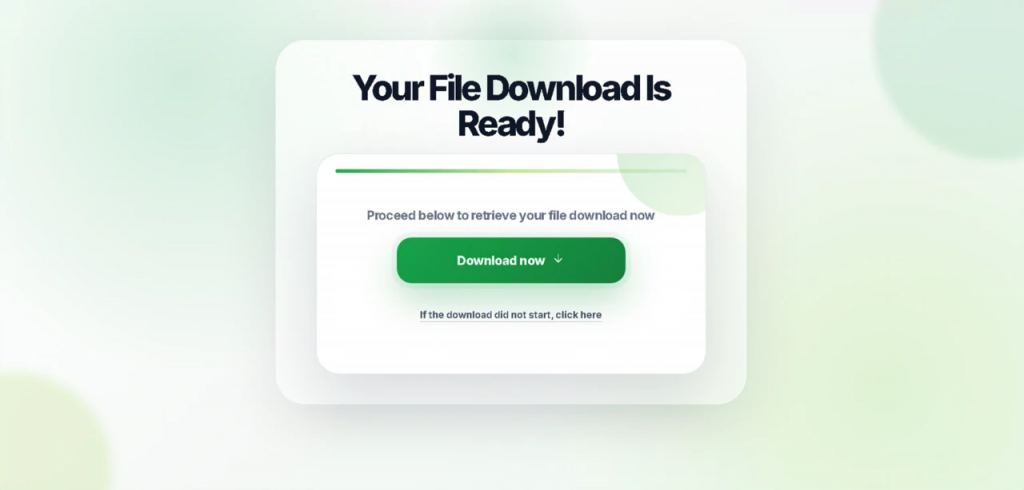
Pirated movie sites often use familiar artwork, trailers, plot summaries, quality labels, and fake reviews to look trustworthy. When someone tries to watch or download a film, the site may show a browser warning, claim an extra component is required, ask for notification permissions, or send them through several download pages. These steps can lead to intrusive ads, unwanted software, harmful files, or fraudulent forms designed to collect passwords, payment details, and other personal information. Because the prompts are presented as a routine part of accessing the movie, it’s easy to keep clicking without realizing the risk.
The piracy brand names people recognize aren’t the brands they remember
YTS/YIFY and 1337x are two of the most recognizable names in movie piracy. TrendLife analyzed all piracy-mirror domains blocked between January 1 and August 6, 2026, and the analysis shows almost all of it pointing to exactly those two brands: 88% to sites branded YTS or YIFY, the rest, 12%, to 1337x. One domain alone, ytstvmovies[.]xyz, made up about 85% of the total. YTS/YIFY, though, hasn’t been a legitimate service in a decade: it was shut down by the Motion Picture Association of America (MPAA) in 2015, and the original domain was handed over as part of the settlement. Every “YTS” site today, including the one responsible for most of it, is an unofficial clone run by unknown operators. A familiar-sounding piracy brand name doesn’t mean a known, stable source. It means a name that keeps getting reused by whoever has most recently taken over running the clone.
The malware risk here isn’t unique to movies
This isn’t limited to what TrendLife saw, either. Two other separate studies point to the same pattern. A 2025 study by Dr. Paul Watters, covering piracy sites in Southeast Asia, found that people are up to 52 times more likely to encounter cyber threats on those sites than on legitimate ones. Separately, a 2025 Trend Micro analysis of fake installers and pirated software, not specific to movie piracy, found attackers targeting people searching for cracked programs through YouTube tutorials, video descriptions and comments, and ordinary search results. The malicious files were hidden behind trusted-looking download links to dodge detection. The brand name attached to the lure changes, but the goal behind it stays the same: to get a disguised file onto a device.
Movie releases don’t drive a spike in scam activity
It’s a reasonable assumption that piracy scams surge right when a big movie comes out, so the detection data was checked against two 2026 releases: The Odyssey (July 17) and the international rollout of Spider-Man: Brand New Day (July 28-31). Neither release produced a measurable spike. The Odyssey’s release day accounted for about 5% of the detections in this window, the same share as the days immediately before and after it. Spider-Man’s release window nudged the total up to about 8% on July 29, but the largest single market, the US on July 31, registered only about 3%, and the two days after that saw none at all. The two highest days in the entire window, July 4 (about 11%) and July 9 (about 8%), came before either film released. There’s no safe window to relax in and no predictable danger window to brace for. Searching for a pirated copy carries the same background risk any day of the year, not a risk that spikes around a movie’s opening weekend.
How to stay safe
- Watch new releases in a theater. For a brand-new film, it’s usually the only authorized way to see it right away, with no malware risk.
- Rent or buy through an official digital store once it’s available. Most films reach services like Apple TV, Google Play, Amazon Video, or the studio’s own store within weeks to a couple of months.
- Wait for the streaming release if already subscribed. It costs nothing extra, and carries much less risk than searching for a pirated copy.
- Never install an extra player, plug-in, or “missing component” that a video site asks for. Legitimate streaming doesn’t require this.
- Treat any “fix it now” warning on a site like this as untrustworthy. Close the tab instead of clicking through it.
Wanting an early or free look at a movie everyone’s talking about is an easy impulse to understand. The sites built to exploit that impulse are convincing precisely because they don’t ask for anything unusual on the surface, just one more click to finish loading. The actual risk is a disguised file, a stolen password, or a card number handed to someone who was never selling a movie in the first place. Waiting a little longer, or paying a small rental fee, is the cheaper option every time.
0 Comments
You Might Also Be Interested In...


