
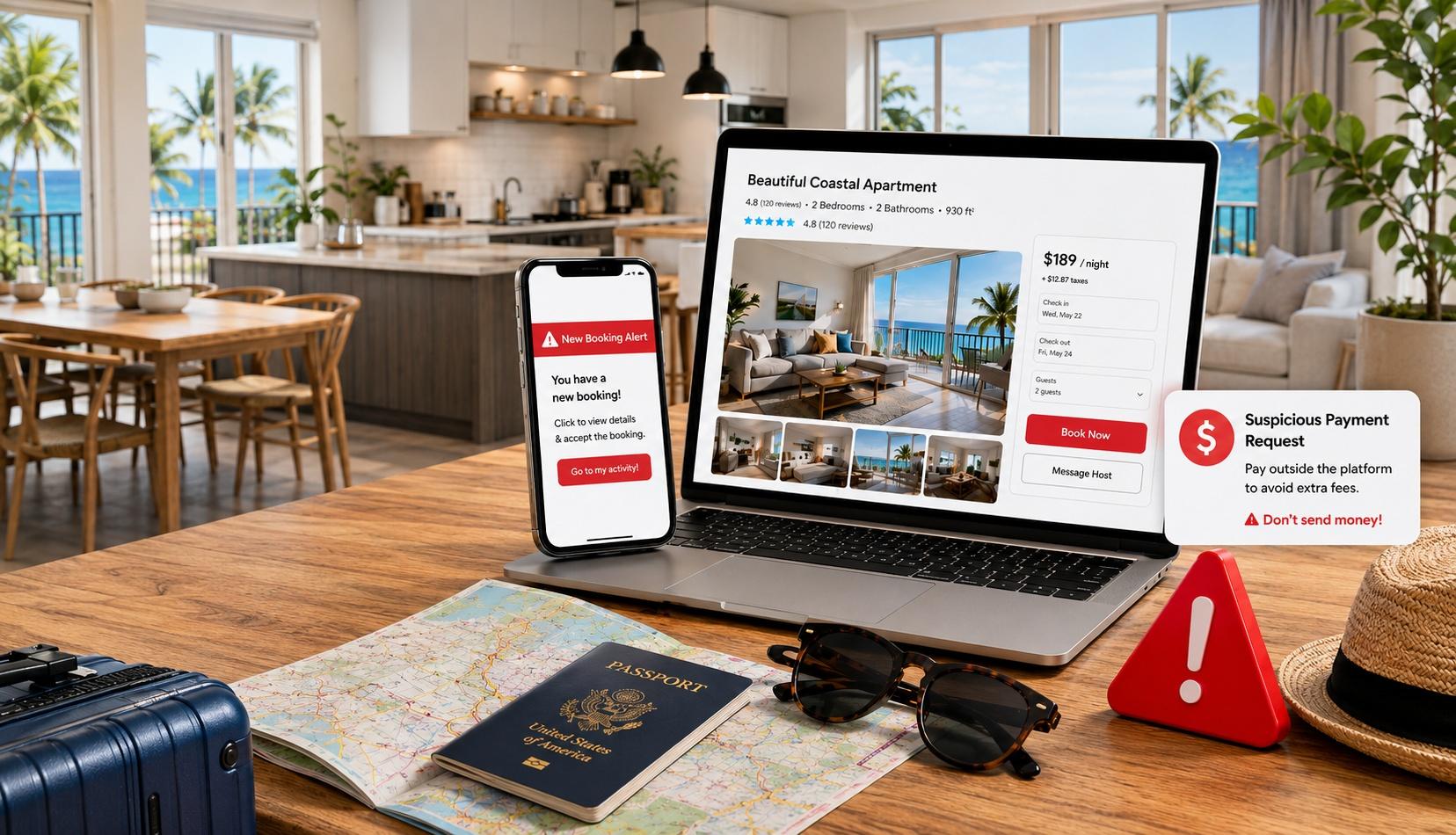
With millions of short-term rental listings available worldwide, Airbnb has transformed the way people travel. But where there’s money and trust involved, scammers aren’t far behind. Whether you’re planning a weekend getaway or listing your own home, knowing what to look out for can save you a serious headache and potentially a lot of money.
Here are the top Airbnb scams you need to know about.
1. Phantom Listings
- Some scammers post listings for properties that simply don’t exist. They use stolen or stock photography to make the ad look convincing, collect the booking payment, and then disappear, leaving the guest to show up at an address that’s either vacant land, someone else’s home, or nothing at all.
How to protect yourself: Before committing to a booking, plug the property address into Google Street View and cross-reference the exterior with the listing photos. If anything looks off, trust your instincts and move on.
2. The Bait-and-Switch
- A host advertises a stunning property at an attractive price. You book it. Then, shortly before your arrival, they contact you to say the original place is “unavailable”, maybe due to a last-minute maintenance issue or a double booking and offer you a different, noticeably inferior property instead.
- Because you’ve already paid and may be running out of time to find alternatives, you might feel pressured to accept. The scammer is counting on that.
How to protect yourself: Don’t accept a replacement property on the spot. Reach out to Airbnb directly and request either a full refund or reassignment to a comparable property. You’re entitled to it.
3. Duplicate Listings
- Fraudulent hosts sometimes post the same property multiple times under different prices. This lets them play the field, cancelling cheaper bookings whenever someone comes along willing to pay more, or simply stranding guests who booked at the lower rate.
How to protect yourself: If you spot two listings with the same photos but different hosts or price points, report them to Airbnb and look elsewhere. Legitimate hosts don’t need duplicate entries.
4. Misleading Property Descriptions
- Not every scam involves a fake property. Some listings are real, but the host has stretched the truth, using heavily edited photos, exaggerating the size of rooms, or claiming amenities that either don’t exist or are unavailable during your stay.
How to protect yourself: Read through all the guest reviews, not just the highlights. Look for comments that mention anything feeling misrepresented or different from the photos. A pattern of disappointment in reviews is a red flag worth noting.
5. Fake or Manipulated Reviews
- A polished review profile can make a suspicious listing look trustworthy. Some scammers engineer this by having friends or paid accounts leave glowing feedback. Others flood their page with vague, generic praise right after creating a listing, hoping to bury any genuine criticism further down.
How to protect yourself: Be wary of listings where multiple five-star reviews were posted in quick succession, especially if they’re short on detail. Authentic reviews tend to mention specifics, the neighbourhood, the check-in process, a particular quirk of the property.
6. Moving Conversations Off-Platform
- If someone, whether a host or a guest tries to shift your communication to WhatsApp, email, or any other channel outside Airbnb, treat it as a red flag. Scammers do this to sidestep Airbnb’s monitoring and get you into a space where its protections no longer apply.
- Once you’re off-platform, you may lose access to dispute resolution, cancellation rights, and refund guarantees if things go wrong.
How to protect yourself: Keep every conversation and booking interaction within Airbnb’s own messaging system. It’s not just a recommendation; it’s how you stay covered.
7. False Damage Claims After Checkout
- After you leave, a dishonest host files a claim saying you damaged the property, broken furniture, stains, holes in walls and requests reimbursement. The “evidence” provided can range from exaggerated to outright fabricated, with some hosts now using AI tools to alter photos.
How to protect yourself: Document everything when you arrive. Take timestamped photos and short video walk-throughs of every room, noting any pre-existing damage. Share this with the host right away. If a claim is made against you that you believe is false, respond within 24 hours with your evidence and escalate to Airbnb.
8. Hidden Cameras
- Small, easily concealed cameras have become cheap and widely available, making it possible for a dishonest host to film guests without their knowledge. Cameras have been found hidden inside smoke detectors, power adapters, clock radios, and other everyday objects.
- Airbnb banned all interior cameras in 2024, but that doesn’t mean every host follows the rules.
How to protect yourself: Do a sweep of the property when you check in. Look for anything that seems out of place, particularly small objects pointing toward beds, bathrooms, or couches.
A little awareness can go a long way when planning your next trip. Taking the time to check details, trust your instincts and stay alert can help you avoid common traps and travel with greater confidence.
0 Comments
Other Topics


